
How Hard Gel Is Removed (and Why You Shouldn't Do It at Home)
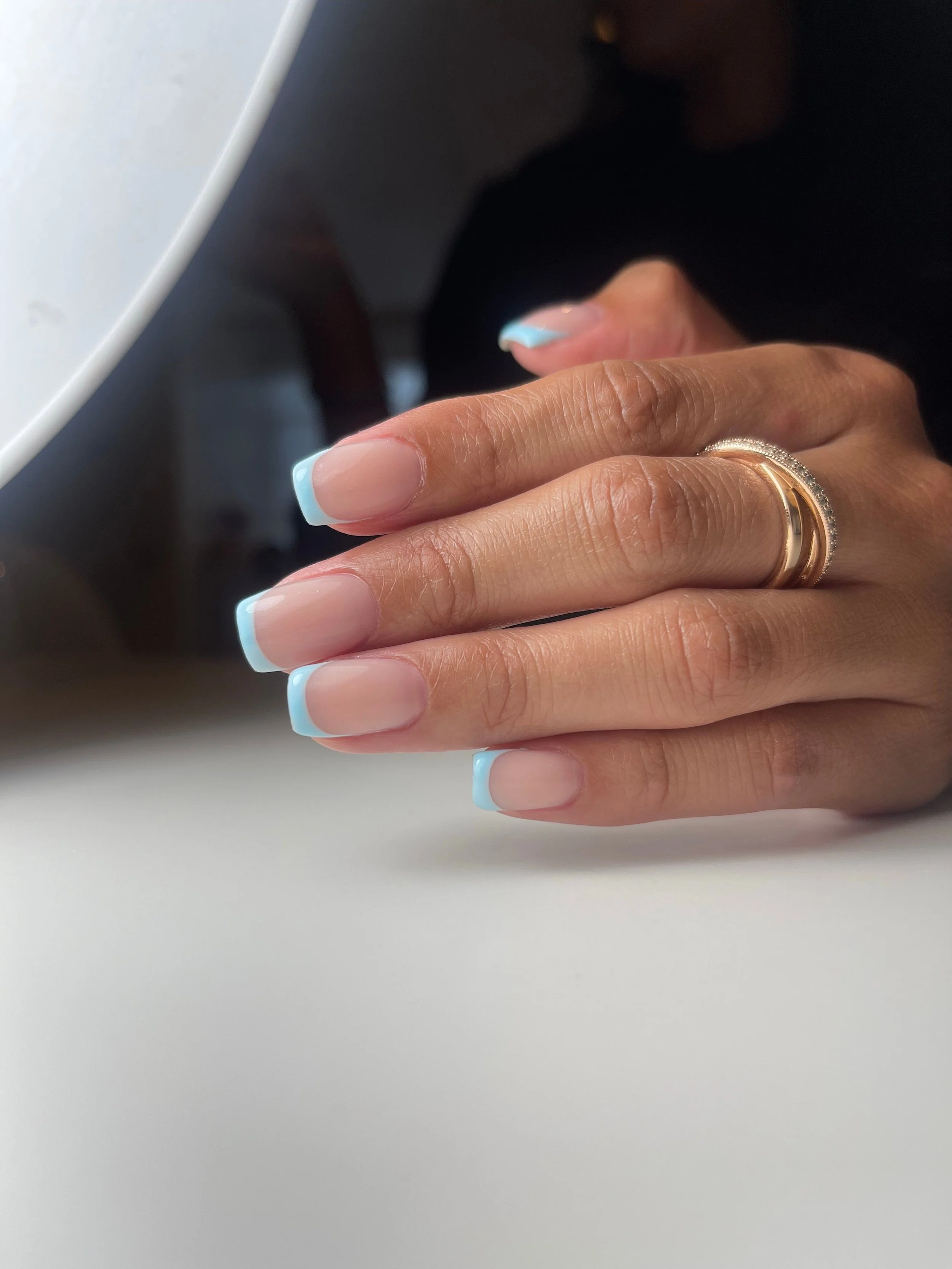
If you've searched how to take off hard gel at home, you've probably found tutorials promising it'll come off with a soak in acetone. It won't. Hard gel is designed not to dissolve, which is exactly why it's so durable. Here's how it's actually removed, what goes wrong when people try at home, and what to do if you have hard gel from another salon.
Why hard gel doesn't soak off
Gel polish and soak-off builder gels are made so acetone can break them down. Hard gel cures into a denser, more rigid material that acetone can't get through. Soaking it for an hour mostly dries out your skin and cuticles, and the gel stays put. (Not sure which you have? Here's the difference between hard gel, builder gel and gel polish.)
How we remove hard gel
Assess. We check for lifting, cracks and how much product is on the nail.
File down in layers. Using an e-file with a smooth bit at low speed, the tech removes color and most of the hard gel, working evenly across the nail without heat build-up.
Leave a thin base, or remove completely. If you're continuing with hard gel or structured gel, we leave a thin, well-bonded layer on the nail and rebuild from there. It protects your natural nail. If you want to go fully natural, the last layer is taken down carefully by hand.
Finish. Shaping, cuticle work and oil, or straight into your new manicure.
Done this way, removal doesn't thin your natural nail. The skill is in knowing when to stop.
What goes wrong with DIY removal
Prying or peeling: the most damaging option. Hard gel is bonded to the top layers of your nail, and peeling it off takes those layers with it, leaving white, thin, bendy patches that take months to grow out.
Over-filing with a hand file: it's very hard to feel where gel ends and nail begins. Most people file into the natural nail, especially near the cuticle.
Long acetone soaks: they don't work on hard gel, and they dehydrate the nail and skin.
Home e-files: used without training, they can cause heat burns and grooves ("rings of fire") in the nail.
If you need to deal with a broken hard gel nail before you can get in, clip or file the broken edge smooth, keep it oiled, and leave the rest for your tech.
Switching to us with hard gel from another salon?
You don't need to remove it first. Book a hard gel refill ($105 to $135) or a Russian manicure with structured gel and mention it in your booking notes. If the existing product is well bonded, we can often build on it. If it's lifted, we'll remove the bad sections and rebuild.
If you have dip, acrylic or Gel-X from another salon, add the Dip/Acrylic/Gel-X Removal ($20) when you book so we plan enough time.
For nail techs: our supply store covers the technical side of removal in why soaking off builder gel might be a mistake.
Book in Wheat Ridge
NashlyNails Studio is appointment-only at Gold's Marketplace, 10087 W 26th Ave in Wheat Ridge, just west of Denver. Book online or see all services and prices.
Frequently asked questions
Can you remove hard gel with acetone?
No. Hard gel doesn't dissolve in acetone, so long soaks mostly dry out your skin and cuticles. It has to be filed off.
How is hard gel removed at a salon?
A trained tech files it down in layers with an e-file at low speed, then either leaves a thin well-bonded base to rebuild on or carefully takes off the last layer if you want to go natural.
Can I remove hard gel at home?
We don't recommend it. Peeling, over-filing and untrained home e-file use are the most common ways people damage their natural nails.
Do I need to remove hard gel from another salon before my appointment?
No. Book a hard gel refill ($105 to $135) or a Russian manicure with structured gel and mention it in your booking notes. If the product is well bonded, we can often build on it.
